4 min read
How Insurance Agencies Can Generate More Quote Requests Through Their Websites
Coverage pages, short quote forms, compliant trust signals and fast follow-up: how an independent agency website can turn visits into quote requests.
NNebula Webtech
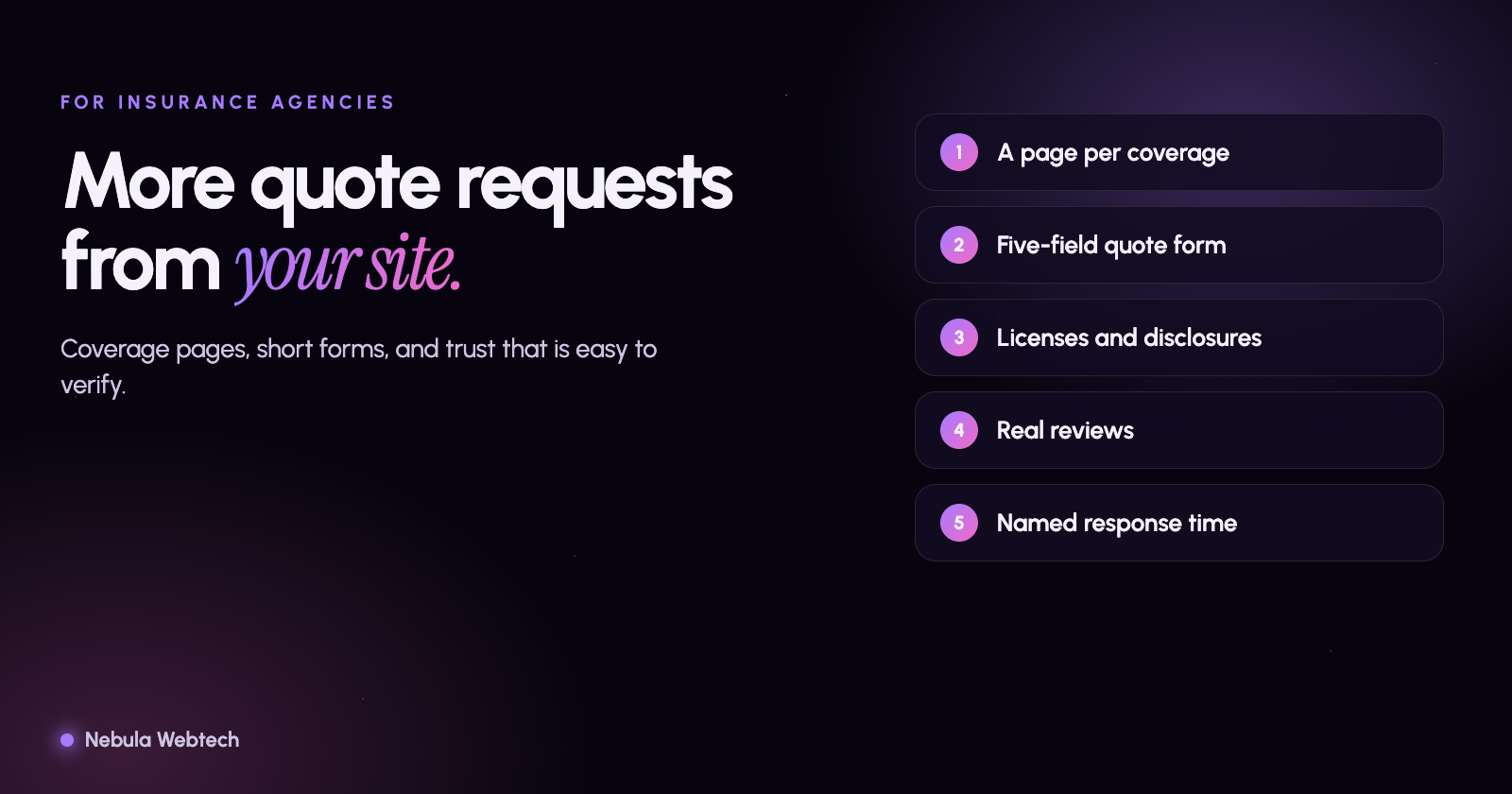
Insurance agencies get more quote requests from their websites when each line of coverage has its own clear page, the quote form is short and works on a phone, trust signals are specific and verifiable, and every request gets a fast personal reply. Compliance matters too: licensing details, required disclosures and honest wording protect both the agency and the visitor.
Short answer: People shopping for insurance compare quickly and decide who feels trustworthy and easy to reach. A website that explains each coverage plainly, asks for only what is needed to start a quote, and promises a timely call back gives an independent agency a real chance against national brands.
What do insurance shoppers want from an agency website?
They usually want to know four things: whether you can help with their situation (auto, home, life, business, health, or a bundle), whether you are legitimate and licensed in their state, how the quote process works, and how fast someone will respond. Many are also comparing you against online quote tools, so removing friction matters.
How should the site be structured?
One page per line of coverage
A single "Insurance" page cannot rank or convert for "small business insurance in Palatine" and "renters insurance" at the same time. Create separate pages for each line you sell, such as personal auto, homeowners, renters, commercial, and life. On each page cover:
- Who the coverage is for and what it typically includes, in plain language
- Common questions and situations people face
- The carriers or program types you can offer, if that is appropriate to say
- A clear "Request a quote" action
Write for understanding, not jargon. Search engines and AI answer tools both favor pages that answer the exact question a person asked.
Local pages that are really local
If you serve several towns, a page for each is useful when it carries genuine local information: the office address, who answers the phone, local considerations, and how you work with clients in that area. Keep your Google Business Profile accurate and consistent with the website.
A short, mobile-friendly quote form
Ask only for what you need to start the conversation: name, phone or email, type of coverage and ZIP code. Detailed underwriting questions can come on the call. Add a line that sets expectations: "A licensed agent will contact you within one business day." Avoid long multi-step forms that ask for sensitive details such as Social Security numbers before a relationship exists.
Trust and compliance, done properly
- Licensing: Show your agency name, license information where required in your state, and the states you are licensed in.
- Carrier relationships: Only name carriers you are appointed with, and follow carrier branding rules.
- Disclosures: Include privacy policy, terms, and any disclosures your state or carriers require. Ask your compliance contact before using words like "lowest rates" or "guaranteed".
- Reviews and testimonials: Use real, attributable reviews. Never invent them.
- Secure forms: Use HTTPS and handle personal information carefully.
How can you make follow-up fast?
Speed to contact often decides who wins the quote. Send an instant confirmation, alert an agent on their phone, and assign an owner so no request sits unclaimed. Our guide to after-hours inquiries covers the setup in detail.
How do you show up in search and AI answers?
Insurance searches are heavily competitive, so aim for specifics:
- Pages titled around the coverage and place, such as "Business owner's policy in Palatine, IL"
- Helpful guides: "What does a business owner's policy cover?", "How much renters insurance do I need?" written with care and clearly labeled as general information
- Valid
LocalBusinessorInsuranceAgencystructured data that matches the visible page - Fast pages that pass Core Web Vitals; see how to find technical SEO issues
- Strong, genuine reviews on Google
For how answer engines choose sources, read SEO vs AEO vs GEO.
A checklist for an agency website
- Separate page for each coverage line you sell
- Phone number in the header, tap-to-call on mobile
- Quote form with five fields or fewer
- License and disclosure details visible in the footer and on the contact page
- Real reviews with links to the source
- Team page with real agents and credentials
- Instant confirmation and a named response time
- Pages load fast on a phone
Frequently asked questions
Should an agency list prices?
Insurance pricing depends on the individual, so avoid quoting figures you cannot stand behind. Explain what influences the price instead.
Do I need a blog?
A helpful blog supports local and AI search when the articles answer real client questions accurately. Quality and accuracy matter more than frequency.
Can the site connect to my agency management system?
In many cases forms can be integrated with a CRM or management system so requests are logged automatically. It depends on the system's tools.
Let us review your agency website
We build fast, compliant websites with quote workflows for service businesses. Request an insurance-agency proposal or run the free website audit to see what your current site is missing.
- Insurance
- Local SEO
- Industry