3 min read
Why Every Small Business Needs a Professional Website Maintenance Partner
What website maintenance includes, what breaks without it, why you should always own your site and accounts, and how to choose a partner.
NNebula Webtech
A website is not finished when it launches. Software, plugins, browsers and search engines keep changing, and a site that is not looked after gradually becomes slower, less secure and less visible. A professional maintenance partner handles updates, backups, security, monitoring and small fixes so you can run your business, while you keep full ownership of your site, domain and accounts.
Short answer: Small businesses need website maintenance because unmaintained sites break, get hacked and slip in search, usually at the worst time. A good partner prevents those problems, responds fast when something goes wrong and never holds your website hostage.
What does website maintenance actually include?
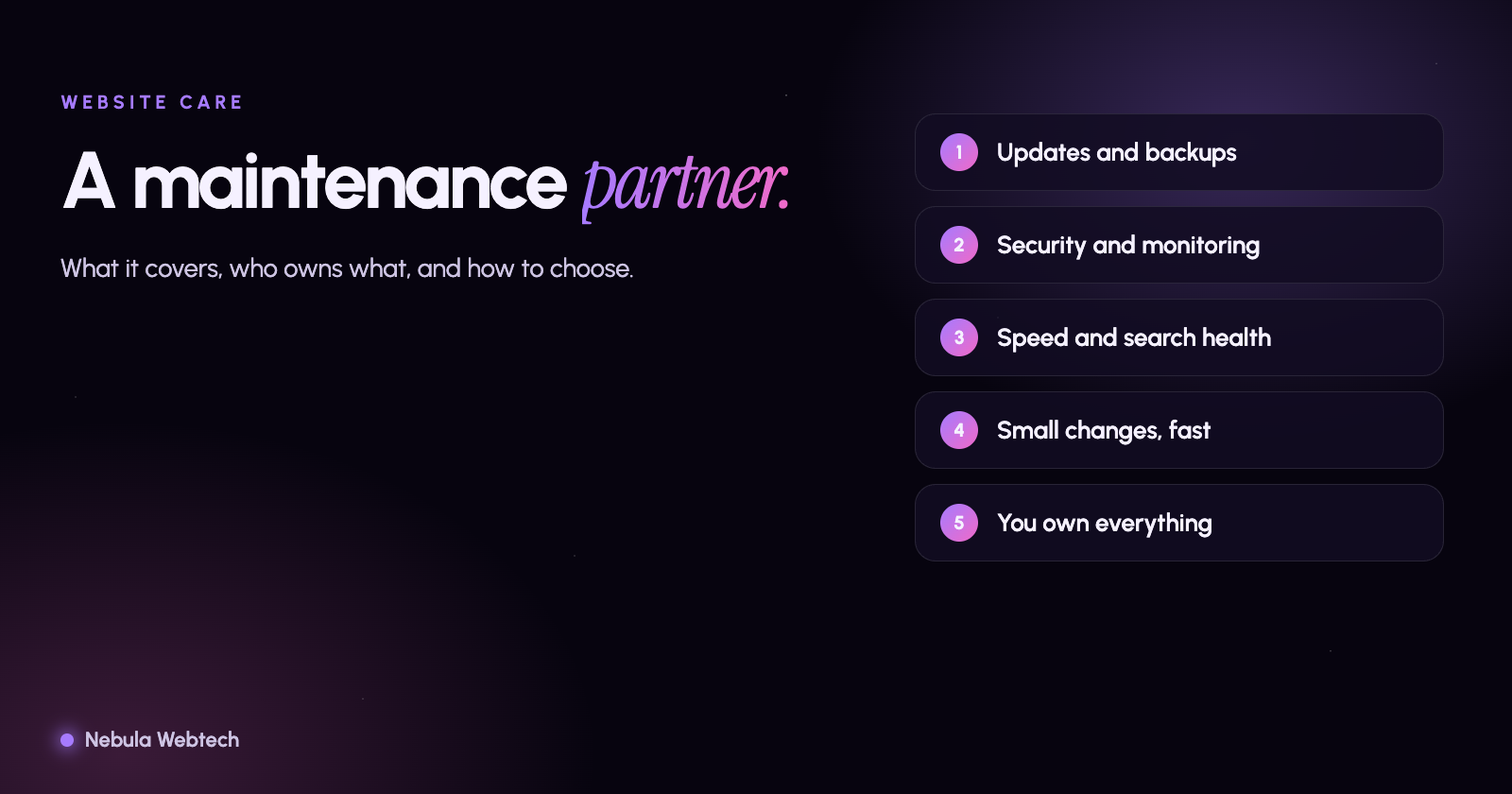
The work is less glamorous than design, and that is why it gets forgotten:
- Updates. Your CMS, themes, plugins and libraries receive security and compatibility updates. Skipping them is how most small-business sites get compromised.
- Backups. Regular, tested copies stored away from the web server, so a bad update or an attack is a restore and not a rebuild.
- Security. Firewalls, malware scanning, login protection, SSL certificate renewal and removal of abandoned plugins and users.
- Monitoring. Alerts when the site is down, slow, or when forms stop delivering messages.
- Performance. Keeping images, scripts and hosting tuned so pages stay fast.
- Search health. Watching Google Search Console for indexing or Core Web Vitals problems, fixing broken links and keeping content accurate.
- Small changes. New hours, a new service page, a corrected phone number.
What happens without it?
The failures are predictable, and they rarely announce themselves:
- A plugin falls behind and a known vulnerability is exploited.
- A browser or platform update breaks the layout or the booking form.
- The contact form quietly stops sending, and inquiries disappear for weeks.
- The SSL certificate expires and visitors see a browser warning.
- Pages slow down as images and scripts accumulate, and visitors leave.
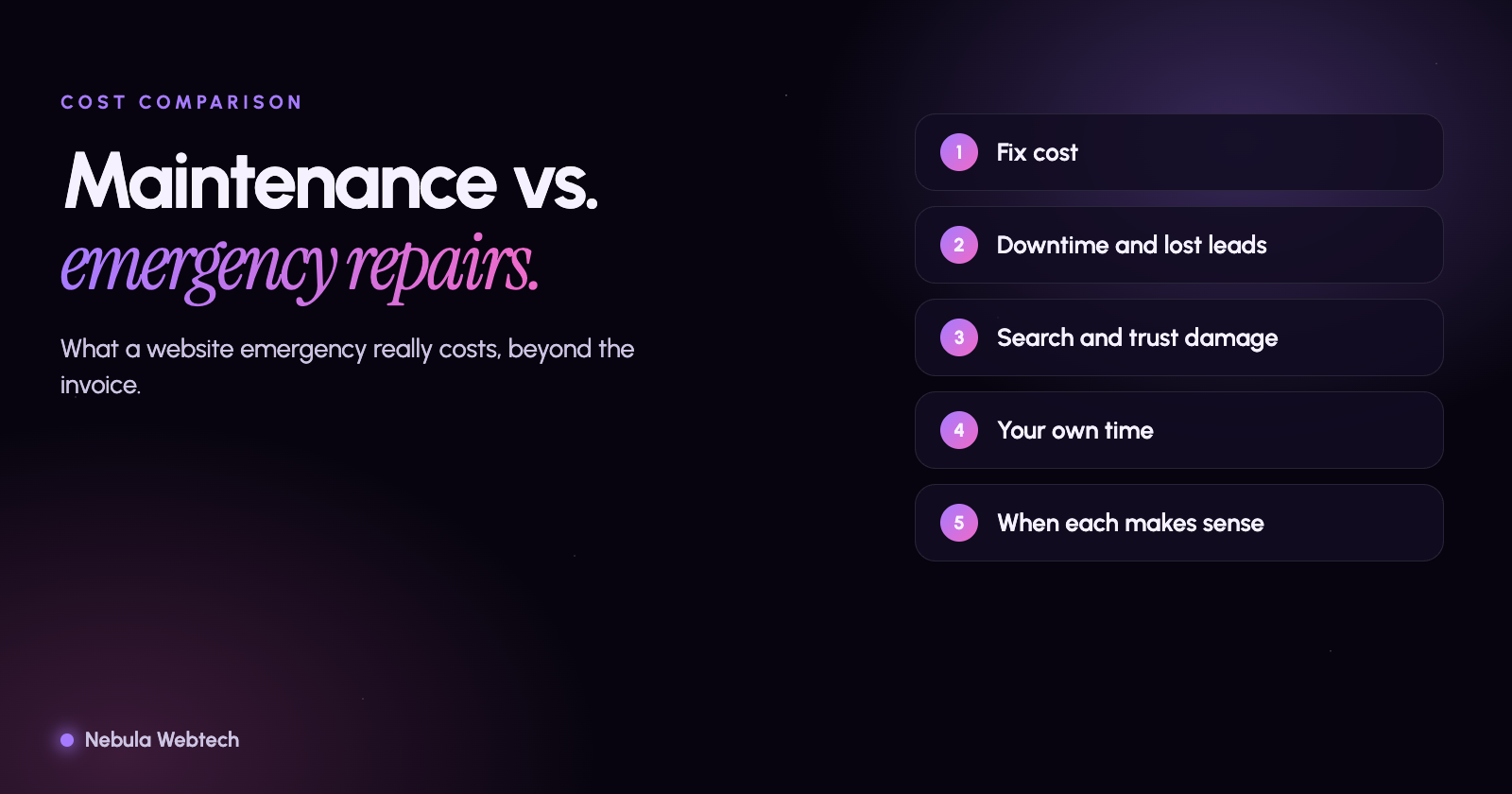
Each one costs leads. For a closer look at the cost comparison, see website maintenance vs. emergency repairs.
Who owns the website when you hire a maintenance partner?
You do. This matters more than any feature on a proposal, so ask before you sign. A trustworthy partner will confirm in writing that:
- The domain is registered in your name and you have the login.
- Hosting accounts are in your name, or you have full administrative access.
- You have admin access to your CMS and analytics.
- You can leave at any time and receive backups and documentation.
A partner earns the relationship by doing good work, not by controlling your access. If a company will not give you your own credentials, that is a warning sign.
Can you do it yourself?
Some owners can, if they are comfortable with updates and have time every week. The honest limits are time and risk. Updates can break things, and the person who notices is often a customer, not you. If your website produces leads or sales, the cost of a few hours of downtime usually exceeds the cost of a maintenance plan.
How to choose a maintenance partner
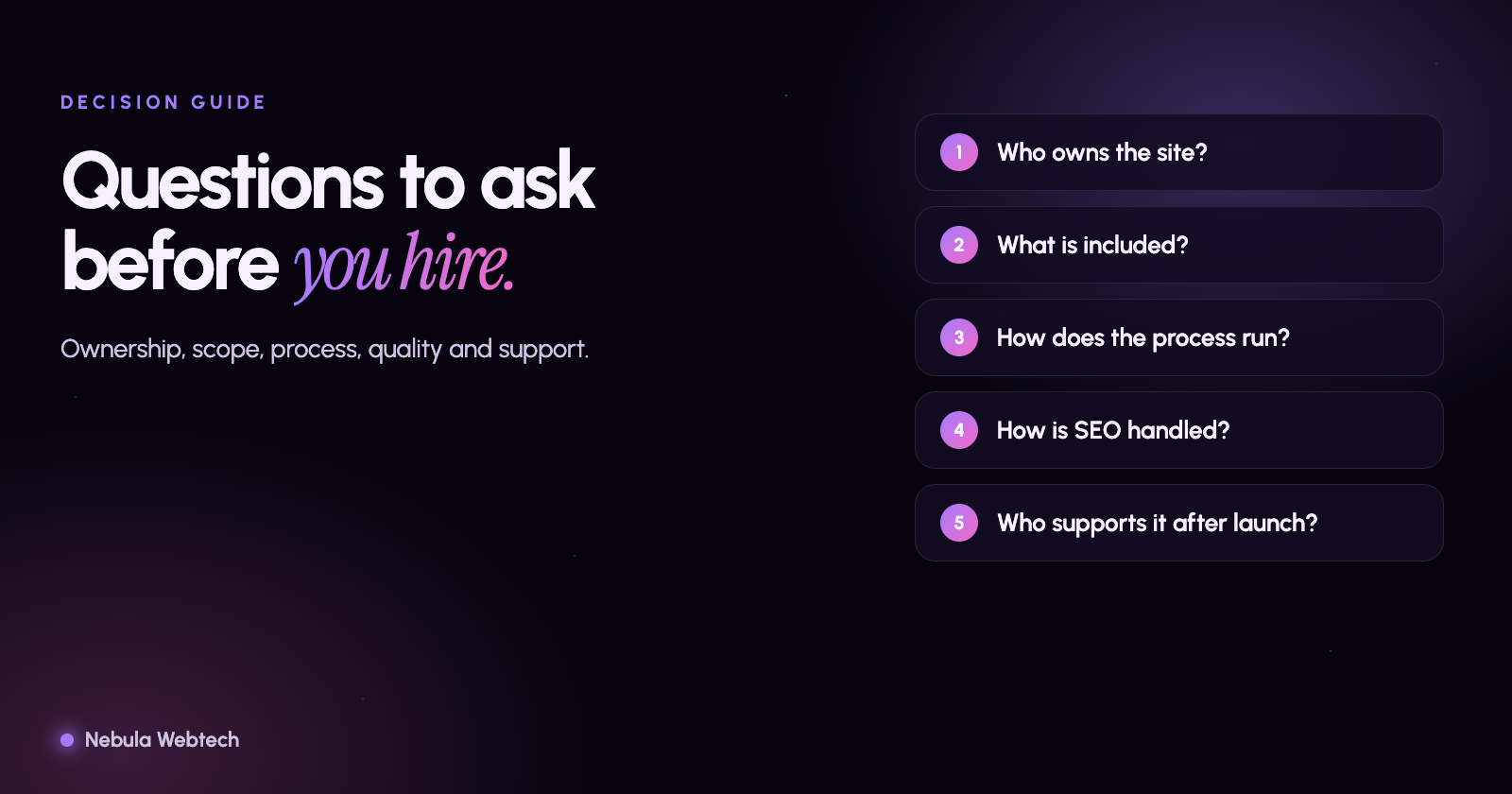
Ask:
- What exactly is included each month, and what is billed separately?
- How quickly will you respond when the site is down?
- Where are backups stored, how often, and have you tested a restore?
- How do you handle security incidents?
- Who owns the accounts, and what happens if we part ways?
- Will I get a plain-language report of what was done?
Our guide to hiring a website company has a longer list of questions for new projects.
Frequently asked questions
How often does a website need maintenance?
Security updates and backups should happen continuously or at least weekly. Monitoring should be running all the time, and a content and search review makes sense quarterly.
Is maintenance only for WordPress?
No. WordPress sites need frequent plugin and core updates, but custom and framework-based sites also need dependency updates, hosting upkeep, monitoring and backups.
What if my site was built by someone else?
A maintenance partner can usually take over an existing site after a review of its condition. We start with an assessment so there are no surprises.
Talk to us about maintenance
Our web maintenance services cover updates, backups, security, monitoring and support, and you keep ownership of everything. Request a maintenance assessment and we will review your site and tell you what it needs, in plain language.
- Maintenance
- Security
- Small business